the sheep has eaten the flower
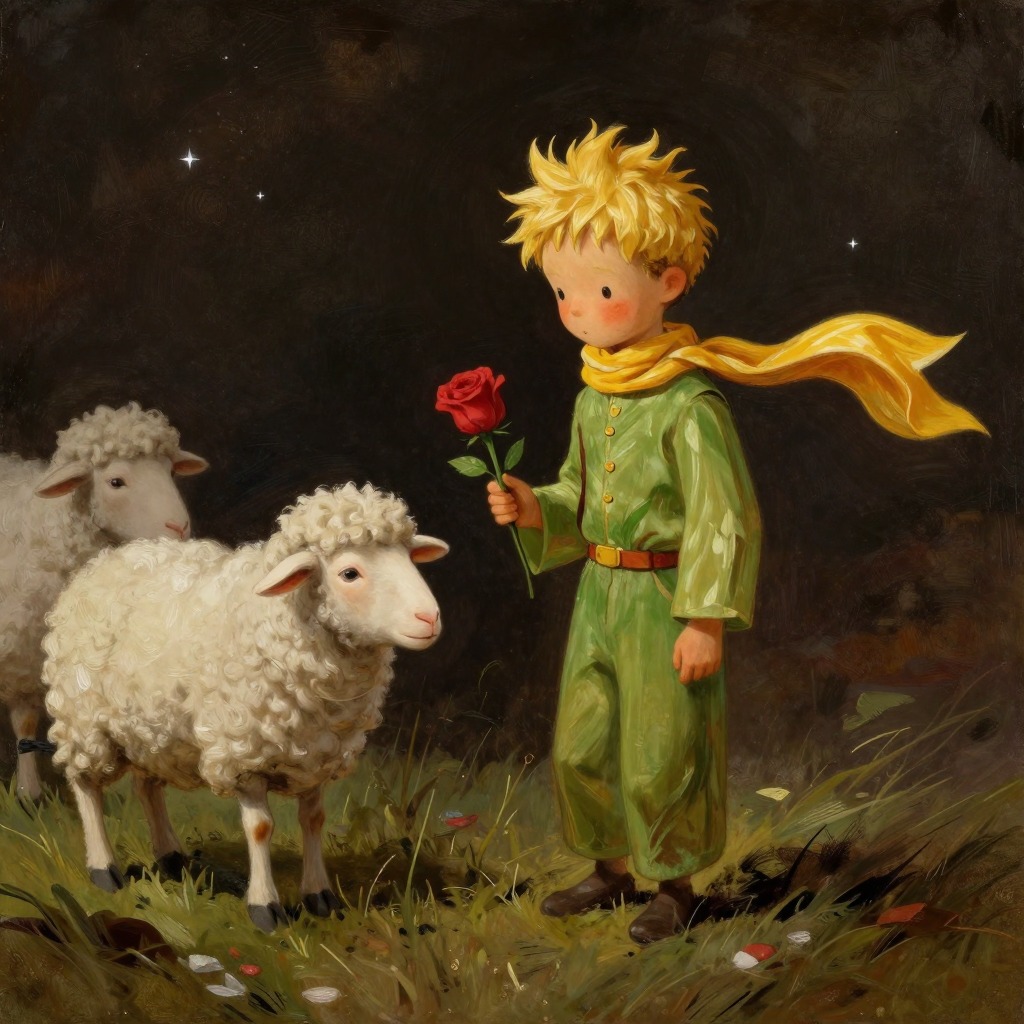
The phrase "the sheep has eaten the flower" is the haunting question that closes the narrator's account of the Little Prince. It is not a statement of fact but a possibility that the narrator cannot dismiss, and it carries the weight of the entire story's meaning. The question arises from a small, almost comic oversight: when the narrator drew the muzzle for the Little Prince's sheep, he forgot to add the leather strap. Without the strap, the muzzle could never be fastened, and so the sheep—the very creature the prince had asked for to keep the baobabs at bay—might, at any moment, devour the prince's beloved rose. This tiny lapse in drawing becomes the hinge on which the fate of a whole world turns, and the narrator's imagination spirals from that single forgotten detail into a cosmic uncertainty that colors every star in the sky.
The Origin of the Question
The question is born from a specific, concrete failure: the narrator's drawing of the muzzle lacked the leather strap. In the story, the muzzle was meant to protect the sheep from eating the rose, but without the strap, the prince could never have fastened it. The narrator acknowledges this oversight with a kind of rueful wonder, noting that the prince "will never have been able to fasten it on his sheep." This forgotten strap is not merely a practical detail; it is the crack through which doubt enters. The narrator's mind immediately turns to the consequences: "Perhaps the sheep has eaten the flower . . ." The ellipsis is telling—it leaves the thought hanging, unresolved, as if the narrator cannot bear to complete the sentence. The question is thus not a philosophical abstraction but the direct result of a human error, a moment of absent-mindedness that the narrator himself cannot undo.
The Twofold Anxiety
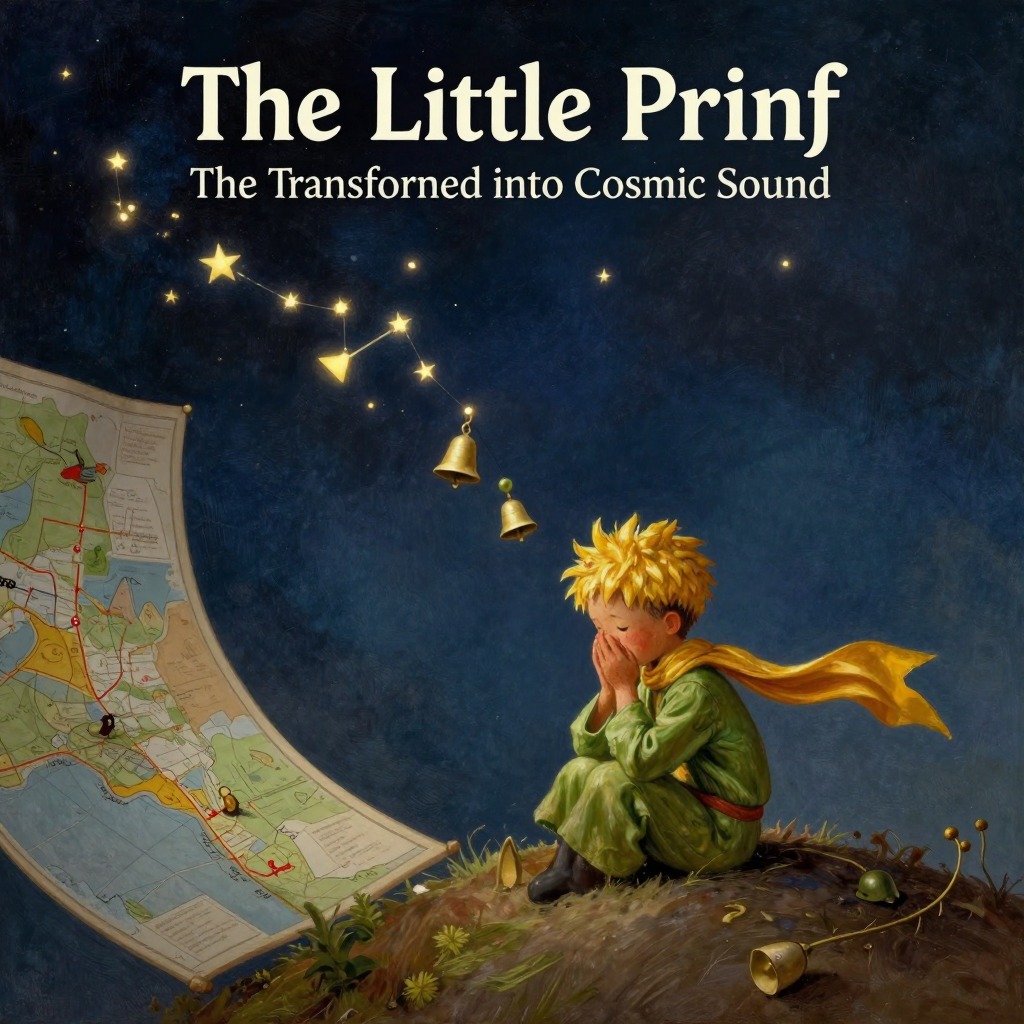
The narrator's anxiety oscillates between two opposing possibilities, each with its own emotional weight. On one hand, he reassures himself: "The little prince shuts his flower under her glass globe every night, and he watches over his sheep very carefully . . ." In this version of events, the prince is diligent, the rose is protected, and the narrator feels "happy," finding "sweetness in the laughter of all the stars." On the other hand, he imagines the opposite: "At some moment or other one is absent-minded, and that is enough!" He pictures an evening when the prince forgets the glass globe, or the sheep slips out "without making any noise, in the night," and then "the little bells are changed to tears." The same stars that once laughed now weep. This oscillation is not merely a private worry; it is a fundamental uncertainty about the nature of care and the limits of vigilance. The narrator's own forgetfulness—the missing strap—mirrors the prince's potential forgetfulness, and neither can be fully trusted.
The Cosmic Stakes
The question "Has the sheep eaten the flower?" is elevated to a matter of universal importance. The narrator declares, "nothing in the universe can be the same if somewhere, we do not know where, a sheep that we never saw has—yes or no?—eaten a rose." The stakes are not local but cosmic: the fate of a single rose on a distant planet determines the meaning of everything. The narrator invites the reader to participate in this uncertainty: "Look up at the sky. Ask yourselves: is it yes or no? Has the sheep eaten the flower? And you will see how everything changes . . ." The question is thus not just the narrator's private torment but a shared test for anyone who loves the Little Prince. And yet, the narrator insists, "no grown-up will ever understand that this is a matter of so much importance!" The adult world, with its concern for practical matters, cannot grasp that a sheep eating a flower could be the most significant event in the universe. This is the story's final assertion of the child's perspective: that love and loss are measured not in grand events but in the smallest, most fragile details.
The Unresolved Ending
The question is never answered. The narrator does not know whether the sheep has eaten the flower, and the reader is left in the same state of suspense. This unresolvedness is deliberate: it keeps the story alive, open to both hope and sorrow. The narrator's final plea to the reader is to watch for the Little Prince's return, to send word "that he has come back." The question of the sheep and the rose is thus intertwined with the hope of reunion. If the prince returns, perhaps the flower is safe; if he does not, the uncertainty remains. The phrase "the sheep has eaten the flower" is therefore not a conclusion but a beginning—an invitation to keep wondering, to keep looking at the stars, and to keep believing that the answer, whatever it is, matters more than any grown-up could comprehend.